

When it comes to commercial buildings, few systems are as important as the fire alarm system. While most business owners hope it never needs to be used, a properly functioning fire alarm system can make the difference between a minor incident and a devastating loss. More importantly, it gives occupants valuable time to evacuate safely during an emergency. At Postma Electric, we understand that commercial fire alarm systems are not just another building feature. They are an essential part of protecting lives, property, and business operations.
Whether you own an office building, warehouse, retail space, restaurant, or industrial facility, your fire alarm system must be reliable, properly maintained, and compliant with current safety regulations. Investing in professional fire alarm installation and ongoing maintenance helps ensure your building is prepared when it matters most.
How Commercial Fire Alarm Systems Work
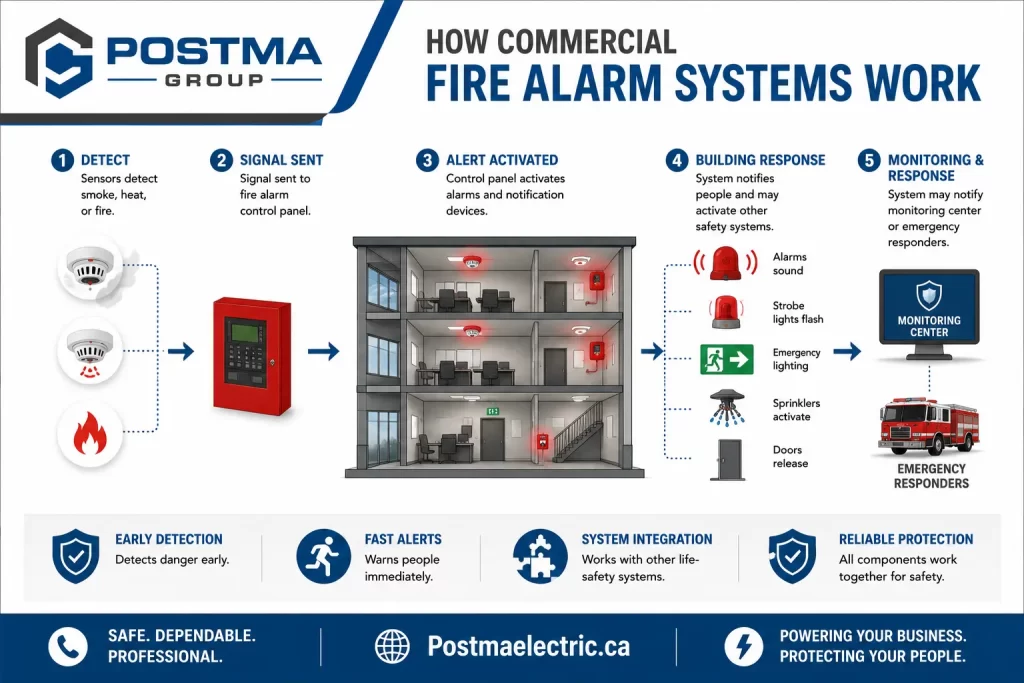
Commercial fire alarm systems are designed to detect the earliest signs of fire and immediately alert building occupants. While every building is different, the basic principle is the same. Sensors located throughout the property continuously monitor for smoke, heat, or other indicators of fire. When a hazard is detected, the system sends a signal to the fire alarm control panel, which acts as the central command centre for the entire system.
The control panel then activates notification devices throughout the building. Alarms sound, strobe lights begin flashing, and in many buildings the system also communicates with monitoring services or emergency responders. Some commercial systems are integrated with other life-safety equipment such as emergency lighting, sprinkler systems, smoke control systems, and automatic door releases, helping occupants exit safely while assisting firefighters in responding to the emergency.
Because these systems are interconnected, every component must function correctly for the system as a whole to perform as intended.
Components of a Modern Fire Alarm System
Modern commercial fire alarm systems consist of several components working together to provide early detection and rapid notification.
Smoke detectors are often the first line of defence. These devices detect smoke particles in the air and alert the system quickly before a fire has the opportunity to spread. In some commercial environments, heat detectors are also used, particularly in areas where smoke or dust might cause false alarms. Heat detectors respond when temperatures rise above safe levels, providing an additional layer of protection.
Manual pull stations remain an important part of commercial fire alarm installation. These devices allow building occupants to activate the alarm manually if they discover a fire before automatic detection responds. They are positioned near exits and other accessible locations throughout the building.
Notification devices are what most people recognize immediately during a fire alarm activation. Horns, speakers, bells, and flashing strobe lights alert everyone inside the building that an emergency exists and that evacuation should begin. In larger facilities, voice evacuation systems may provide spoken instructions to guide occupants safely out of the building.
Together, these components create a coordinated life-safety system designed to detect emergencies quickly and deliver clear notification throughout the property.
Meeting Fire Alarm Compliance Requirements
Commercial fire alarm systems are governed by strict codes and regulations designed to protect building occupants. Depending on the building type, occupancy, and intended use, specific requirements determine where detection devices must be installed, how alarms are monitored, and how frequently systems must be tested and maintained.
Meeting these compliance requirements is not simply about avoiding penalties. Properly maintained systems help ensure occupants receive early warning during an emergency and that the building meets insurance and life-safety expectations. During renovations, tenant improvements, or occupancy changes, fire alarm systems may also need to be modified to remain compliant with current regulations.
Working with an experienced fire alarm electrician helps ensure installations and upgrades are completed correctly and meet all applicable codes. Professional guidance also helps building owners navigate inspections and documentation requirements more efficiently.
Signs Your Fire Alarm System Needs Service
Like any critical building system, fire alarms require ongoing attention to remain dependable. Over time, components naturally age and environmental conditions can affect their performance. Ignoring small warning signs can lead to system failures at precisely the moment protection is needed most.
False alarms are one of the most common indicators that a system requires attention. While occasional issues can occur, repeated false alarms often signal that detectors, wiring, or control equipment should be inspected. Warning lights or trouble messages displayed on the fire alarm panel should never be ignored, as they typically indicate a fault somewhere within the system.
Physical damage to devices, inconsistent alarm operation, or equipment that has not been inspected for an extended period are all reasons to schedule professional service. Businesses that have recently completed renovations or changed the layout of their building should also have their fire alarm system evaluated to confirm that coverage remains appropriate.
The Importance of Regular Inspections and Testing
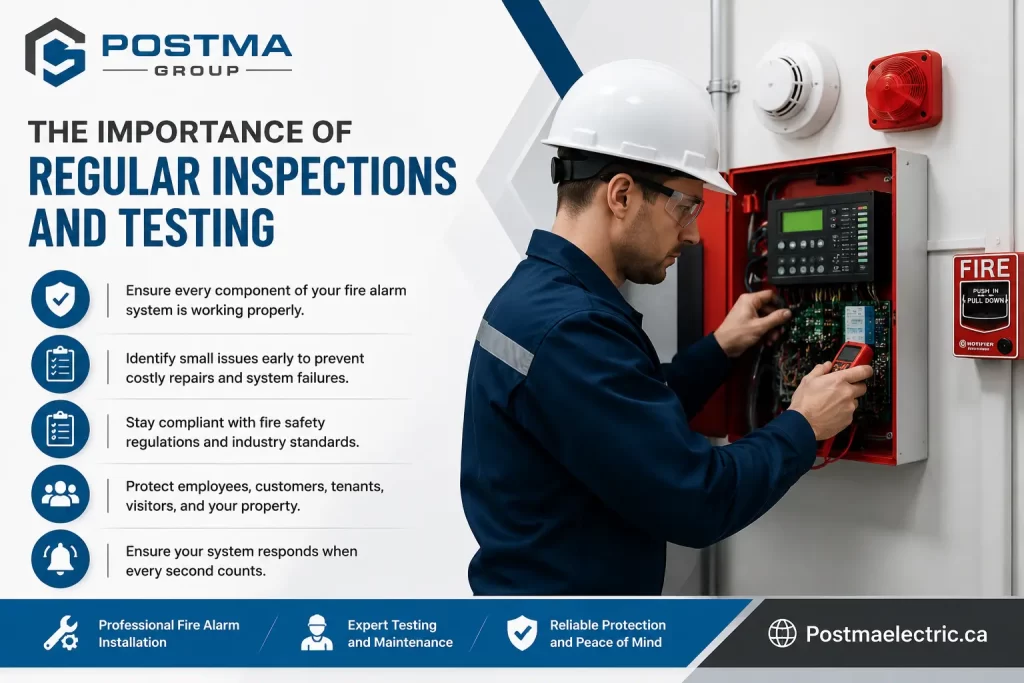
Installing a fire alarm system is only the first step. Ongoing maintenance is essential to ensure every component continues to operate properly throughout the life of the building.
Regular inspections allow trained professionals to test detectors, pull stations, notification devices, batteries, and control panels to verify they are functioning correctly. Small issues can often be identified and corrected before they develop into larger, more expensive problems. Preventative maintenance also helps reduce unexpected system failures and supports ongoing compliance with applicable fire safety regulations.
Routine testing gives building owners confidence that their system will respond quickly during an emergency. It also demonstrates a genuine commitment to protecting employees, customers, tenants, and visitors while helping preserve valuable property and business operations.
At Postma Electric, we provide professional fire alarm installation for commercial buildings throughout Red Deer and Central Alberta. If you need a new commercial fire alarm system or the expertise of an experienced fire alarm electrician, our team is committed to helping keep your building compliant, protected, and ready when every second counts.